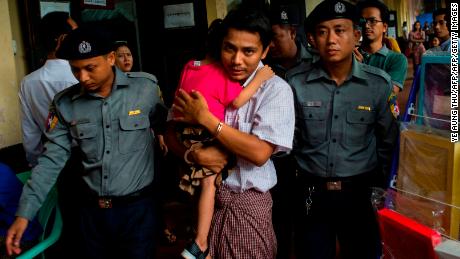
Wa Lone, 32, and Kyaw Soe Oo, 28, were originally detained in December 2017, after working on an investigation into the mass killing of a number of Rohingya villagers in Myanmar's Rakhine state.
Following sentencing Kyaw maintained the pair's innocence, but added that they were unsurprised by the verdict. "We didn't go anything wrong," he said. "We're not exactly shocked by the verdict."
They were charged with breaching the colonial-era act, which carries a maximum penalty of 14 years in prison, in July. The two men pleaded not guilty.
The verdict was due last Monday, but the judge delayed it saying he was too ill to attend court that day.
The case has drawn international criticism for attacking freedom of speech and further focused attention on the military's crackdown in Rakhine.
Both journalists testified in court that two police officers, who they had not previously met, had given them papers relating to their investigation during a meeting in a Yangon restaurant. Shortly after, they were arrested by plainclothes officers.
In April, a Myanmar police officer, Moe Yan Naing, testified that he had witnessed a plot by senior police to frame the two journalists by planting secret documents on them.
Mass exodus
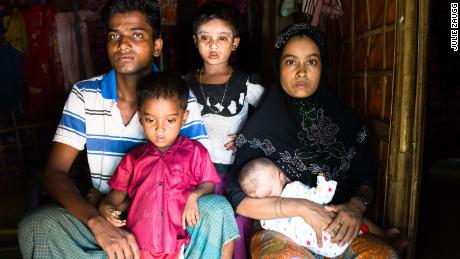
Last August, hundreds of thousands of Rohingya Muslims started fleeing across the Myanmar border into Bangladesh into what's since become the world's biggest refugee camp. Many of those who crossed the border have recounted horrific stories of being driven from their homes under threat of death.
An independent United Nations investigation into alleged human rights abuses carried out against the Rohingya has called for the country's military leaders to be investigated and prosecuted for genocide, crimes against humanity and war crimes.
The damning report contains allegations of murder, imprisonment and sexual violence against the Rohingyas, carried out by the Myanmar military, under the guise of a crackdown on terrorists, and against a backdrop of impunity that effectively placed military leaders above the law.
Myanmar's military has repeatedly denied that it has deliberately attacked unarmed Rohingya. Instead, the authorities insist that it only targets Rohingya militants, mostly from the Arakan Rohingya Salvation Army (ARSA) insurgent group that are alleged to have launched deadly attacks on police posts.
In the past, the United Nations has called the alleged campaign of violence, including mass killings, rape and the burning of Rohingya villages by Myanmar government forces a "textbook example of ethnic cleansing," while UN Special Rapporteur Yanghee Lee has said that the attacks bear the "hallmarks of genocide."
More than 700,000 Rohingya refugees now live in squalid conditions in camps on the Bangladeshi side as the two countries attempt to negotiate their return to Rakhine.
Fearless journalism
Reuters published a special investigation earlier this year that featured Wa Lone and Kyaw Soe Oo's bylines.
It documented the killing of 10 Rohingya men reportedly carried out by Buddhist villagers and Myanmar troops. Reuters described the groundbreaking report as the first time that soldiers and paramilitary police had been implicated in testimony from security personnel.
The report used photographs, reporting and interviews conducted in Myanmar and Bangladesh to reconstruct the final moments of the dead men, who were fishermen, shopkeepers, teenage students and a religious teacher.
The Myanmar military has since admitted its forces had a role in the killings, and jailed seven soldiers.

No comments:
Post a Comment